Friday, May 2, 2025

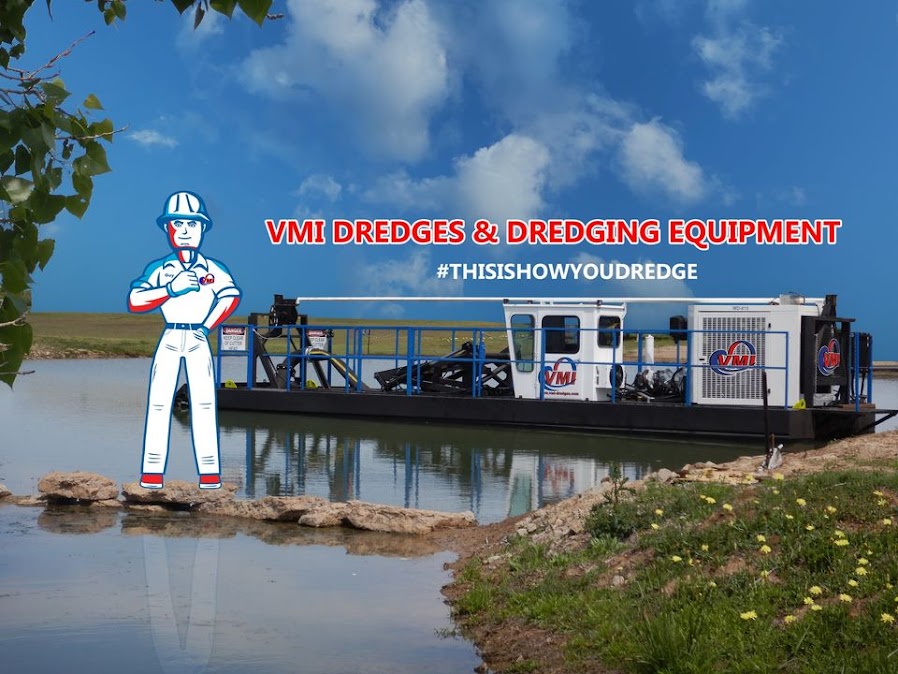
DID YOU KNOW? VMI Dredges offers short-term rentals on dredges, booster pumps, and pipe simple, fast, and flexible.

  🚨 DID YOU KNOW?

VMI Dredges offers short-term rentals on dredges, booster pumps, and pipe simple, fast, and flexible.

 One-month rentals — no long-term contracts
 Get the equipment you need without a major upfront investment
 Same field-proven VMI power, ready to deploy

💡 Thinking about buying?
If you purchase within 30 days of your rental, VMI Dredges may apply 100% of your rental fees toward the purchase price.


That’s serious value with zero commitment up front.

Have you ever rented equipment for a project?
Tell us how it impacted your workflow 👇


Call Pat Sumpter at 918-225-7000, Ext. 12 to learn more or visit www.vmidredges.com.

#ThisIsHowYouDredge #DredgingSolutions #RentalEquipment #DredgeRental #VMIDerdgerental


VMI Dredges Did You Know?

 https://youtube.com/shorts/7-0wxQiw5M8?feature=share

VMI Dredges Logo

Pat Sumpter, Sales Manager, 918-225-7000, Ext. 12

www.vmidredges.com • sales@vmi-dredges.com
Call Now       Email Us

Thursday, May 1, 2025

Throwback Thursday: The Horizontal Mini-Dredge That Made Big Waves

  Throwback Thursday: The Horizontal Mini-Dredge That Made Big Waves

At VMI Dredges, our reputation for tough, reliable dredging systems didn’t happen overnight, it was earned job by job, project by project.

A VMI Horizontal Mini-Dredge Throwback Thursday

This photo of the early Horizontal Mini-Dredge is a look back at where it all started. Built for mining pits, settling ponds, and industrial applications, it was compact in size but massive in impact. Decades later, the same core principles still drive our modern line, from the MD 615 to the Dredge Gladiator.

Dredging has evolved. VMI has led that evolution from day one.

#thisishowyoudredge #vmidredges #dredginghistory #dredgeequipment #miningsolutions #legacyinmotion #pondmanagement

Wednesday, April 30, 2025

Way Back When, January 18, 1995: VMI-made dredge will clean harbor for America's Cup


VMI-made dredge will clean harbor for America's Cup

KAREN GEYER / Staff Writer

Equipment made in Cushing will be helping to prepare a marina in San Diego, Ca. for this year's America’s Cup Races.  A dredge made by VMI, Inc. was purchased by Driscoll Boatworks and will be used to clean the harbor where the international boat races will be held.

 The dredge purchased for the job was a used one, which sold for about $90,000.

 VMI, Inc. Owner and CEO Gene Maitlen says, "I don't know if it's the secret of my success or not, but I love solving problems. I've had a lot of fun." Maitlen runs his company with his two sons, Randy and Tony. They manufacture dredges used to clean up the environment when there is an oil or chemical spill, or in circumstances where there are ponds, sludge pits, or tanks that need to be cleaned.

 The dredges vary in size and the challenges Maitlen enjoys most is solving specialized technical difficulties for other companies.

 "Before Orange County in California ran into financial difficulty, they were short of water. There were huge basins where river water was stored to percolate and replenish the water table.  After a while sediments would build up and they needed something to clean the bottom of the basins to facilitate the percolation process.  Thy contact4d us and we custom-built a dredge that was turtle-shaped and would go underwater to clean the bottom of the basin.  Likewise,  for other companies, we’ve customized dredges with hydraulic cutterheads to accommodate the slant of a holding tank or pond.  We have over 30 different patents for things we’ve engineered in our 23 years of business,” Maitlen said.

Way Back When January 18, 1995

 Cushing Daily Citizen photo by Karen Geyer

VMI, Inc. employees Tim Thee and Steve Loveland work on a dredge similar to the one shopped to San Diego, CA.  VMI owner Gen Maitlen says the dredge will be used to clean the harbor around a marina where the America’s Cup boat races will be held.

"The dredges have floating discharge hoses which can load the sludge into trucks which take it to landfills.  Sometimes solids and liquids are separated and disposed of differently.  One of our customers is situated near the sea and has tracks going from their building right down into the ocean.  Sand fills up between the tracks and they needed something that would clean it out," Maitlen said.

 He continued, "we've made specialized hand-held dredges for divers to use to clean the tracks."

 Today Maitlen is working on a model that can be used by remote control, so an employee won't be exposed to chemicals.  When a customer, or potential customer, comes to Maitlen with a unique problem, the first thing he does is research.  “We won’t infringe on anyone’s patent.  One of the things we find in this business is that larger companies can make changes, but it will take two or three years to implement those changes.

 "We evaluate what needs to be done and if it is good, we can make it happen in 30 days," Maitlen said.

 Maitlen has a family farm where he and wife, Peggy, raise Beefmaster cattle. His grandparents bought the farm from Indians in 1903. His parents had a total of six children, who sold their part of the land to Gene. Now, his kids just bought the last parcel to make the farm encompass a full section. He said, "all my grandchildren are on that farm, making it five generations that have lived there."

 Maitlen's children are Linda, (former owner of Linda M's Restaurant), Randy and Tony, who work with VMI, and Beckye Parker, who, with her husband, John, has Norfolk Produce.


Monday, April 28, 2025

Guy Says . . . You can’t float steel without welders

  Guy Says . . .

You can’t float steel without welders.
RESPECT THE SPARK. 🔥⚡️

April is National Welding Month—
so raise your hood to the ones who hold it all together.

Tag a welder who keeps your world from falling apart.
#ThisIsHowYouDredge #RespectTheSpark #WeldingMonth #VMIDredges #GuytheDredgeGuy

VMI Dredges Guy the Dredge Guy Quote 4_28_25

 https://youtube.com/shorts/rfYeP1hN5kY?feature=share

Friday, April 25, 2025

The Science of Sediment Removal: What Happens Underwater?


  The Science of Sediment Removal: 

What Happens Underwater?

VMI Dredges Logo

Sediment removal plays a crucial role in maintaining waterways, restoring ecosystems, and supporting industries that rely on clean and navigable water. But what actually happens beneath the surface when a dredge goes to work?

Dredging isn’t just about scooping up mud and sand—it’s a carefully engineered process based on fluid dynamics, sediment behavior, and environmental impact considerations. In this article, we’ll dive into the science of sediment removal, exploring how dredging works, the forces at play, and why it’s essential for waterway management.

What is Sediment, and Why Does It Need to Be Removed?

Sediment is the natural material—sand, silt, clay, and organic debris—that accumulates at the bottom of lakes, rivers, harbors, and industrial basins. While sedimentation is a natural process, excessive buildup can create major problems:

Navigation Hazards: Harbors, shipping channels, and rivers can become too shallow for vessels.

Water Quality Issues: Suspended sediments can block sunlight, harming aquatic ecosystems.

Flooding Risks: Blocked drainage channels and reservoirs increase the likelihood of flooding.

Contamination Concerns: Industrial and urban runoff can introduce heavy metals, chemicals, and nutrients that degrade water quality.

To address these challenges, dredging removes unwanted sediment, restoring depth, improving water flow, and ensuring safe and sustainable waterway use.

The Science Behind Dredging: How It Works

Dredging involves the displacement and transportation of submerged sediments using specialized equipment like horizontal dredges, cutter suction dredges, and amphibious excavators. The process relies on key scientific principles:

1. Sediment Disruption & Loosening

Before sediment can be removed, it must first be loosened from the waterbed. Depending on the type of dredge used, this can happen in several ways:

Mechanical Agitation: Cutter suction dredges use rotating cutterheads to break up compacted material.

Auger Action: Horizontal dredges employ an auger head to stir up sediment in a controlled manner.

Hydraulic Erosion: Some dredges use water jets to fluidize sediment before pumping it away.

VMI Dredges Horizontal Dredger

Science at Play:

Shear force is applied to break sediment cohesion (how tightly particles stick together).

Grain size affects how easily material can be disturbed—clay is more cohesive than sand and requires more force.

2. Sediment Suspension & Transport

Once loosened, the sediment enters a suspension phase where water and fine particles mix, making it easier to transport.

Dredging pumps create a negative pressure gradient, sucking up sediment-rich water and transporting it through pipelines or discharge systems. The efficiency of this transport depends on:

Density of the slurry (sediment-to-water ratio)

Pump velocity and suction power

Particle size and weight (heavier grains settle faster, while fine silt remains suspended longer)

Science at Play:

Stokes’ Law explains how different sediment particles settle in water, larger, denser particles sink first, while fine particles stay suspended.

Hydrodynamics influence how sediment moves through a pipeline or water column.

3. Deposition & Disposal of Sediment

After sediment is removed from the water, it must be properly managed. Depending on the project, the dredged material is:

Disposed of in deepwater sites (for uncontaminated sediment in offshore areas).

Used for land reclamation (to create islands, expand shorelines, or restore beaches).

De-watered and repurposed (for construction, agriculture, or habitat restoration).

Processed to remove contaminants (when dealing with polluted sediment).

Science at Play:

Sediment dewatering uses gravity, geotextile bags, or filter presses to separate solids from water.

Nutrient cycling affects whether dredged material can be safely used for environmental projects.

The Role of Dredging in Environmental Management

While dredging is necessary for infrastructure and industry, it must be conducted responsibly to minimize environmental impact. Science plays a major role in ensuring sustainable sediment removal.

1. Turbidity Control

Turbidity (water cloudiness caused by disturbed sediments) is carefully monitored during dredging. 

Excessive turbidity can:

Reduce oxygen levels, harming aquatic life.

Block sunlight, disrupting underwater ecosystems.

Solutions:

Silt curtains are used to contain suspended particles.

Low-turbidity dredging methods (such as horizontal dredges) minimize disruption.

2. Habitat Protection & Sediment Relocation

Certain dredging projects relocate sediment to create beneficial habitats, including:

Wetland restoration projects.

Coral reef rehabilitation (using dredged sand to rebuild damaged reefs).

Oyster bed replenishment (placing shell-rich sediment in coastal zones).

3. Water Quality Improvement

Dredging can remove pollutants and restore water quality in contaminated sites, including:

Heavy metal removal from industrial waterways.

Algae bloom control by reducing nutrient-rich sediment.

Oil spill cleanup in coastal and riverine environments.

Choosing the Right Dredge for the Job

The effectiveness of sediment removal depends on selecting the right equipment.

Tip: If your project requires minimal disruption, a horizontal dredge is ideal. If you need high-production sediment removal, a cutter suction dredge is the better option.

The Science Behind Smarter Dredging

Sediment removal is far more than just scooping mud—it’s a precise, science-backed process that ensures safe navigation, healthy ecosystems, and sustainable waterway management. By understanding fluid dynamics, sediment behavior, and dredging technologies, operators can make informed decisions that benefit both their projects and the environment.

At VMI Dredges, we specialize in high-efficiency dredging equipment that balances power with environmental responsibility. Whether you need sediment removal for industrial, municipal, or environmental applications, our team can help you choose the best dredge for the job.

Have a project that requires expert dredging solutions? Contact us today!


VMI Dredges Logo

Pat Sumpter, Sales Manager, 918-225-7000, Ext. 12

www.vmidredges.com • sales@vmi-dredges.com

Call Now       Email Us

Did You Know? Dredge with Purpose. Perform with Power.

  VMI Dredges Did You Know?


🌍 Dredge with Purpose. Perform with Power.

Sediment doesn’t stand a chance when VMI Dredges is on the water.

Our horizontal and cutter suction dredges help keep ecosystems alive by restoring water flow, reducing buildup, and supporting critical habitats. From wetlands to reservoirs, every project is an opportunity to do it right.

💬 How are YOU factoring in environmental impact on your job sites? Drop a comment below.

#thisishowyoudredge #vmidredges #environmentalremediation #dredgingforchange #sustainablesolutions #habitatrestoration #watertreatment #miningsolutions

Thursday, April 24, 2025

This classic VMI horizontal mini-dredge was breaking barriers and setting the standard back when shoulder pads were in and cassette tapes ruled the airwaves.

  #ThrowbackThursday

Before touchscreens. Before GPS.

Just grit, gears, and game-changing innovation.

VMI Dredges Horizontal Mini-Dredge ThrowBack Thursday

📸 This classic VMI horizontal mini-dredge was breaking barriers and setting the standard back when shoulder pads were in and cassette tapes ruled the airwaves. We’ve come a long way, but the heart of VMI is still the same: Built to perform. Engineered to last. 💪


Tag someone who remembers running equipment like this 

👇

#ThisIsHowYouDredge #VMIDredges #TBT #BuiltToLast #DredgeLife #DredgingHistory #MadeInTheUSA

Cutter Suction Dredges: The Workhorse of Modern Dredging

    Cutter Suction Dredges: The Workhorse of Modern Dredging Among the many types of dredging equipment used across the industry, cutter suc...