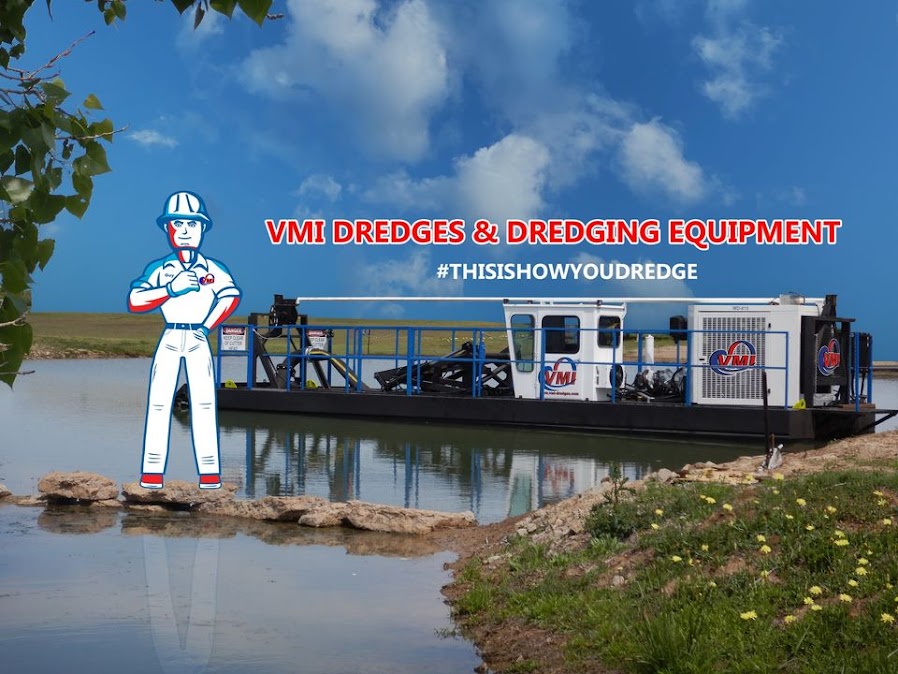
Showing posts with label Dredge Manufacturing. Show all posts

Friday, May 1, 2026

Cutter Suction Dredges: The Workhorse of Modern Dredging

  VMI Dredges Dredge Titan


 Cutter Suction Dredges: The Workhorse of Modern Dredging

Among the many types of dredging equipment used across the industry, cutter suction dredges have become one of the most widely used and effective systems for removing sediment and solids from waterways and industrial environments.

These machines combine powerful cutting capability with efficient hydraulic pumping, making them suitable for a wide range of dredging applications.

How Cutter Suction Dredges Work A cutter suction dredge uses a rotating cutterhead positioned at the intake of the suction pipe.

The cutterhead performs two essential functions: Loosening or cutting compacted material such as clay, sand, or sediment

Feeding that material into the suction pipe, where it is mixed with water and pumped through a pipeline to the discharge location, This process allows cutter suction dredges to continuously remove material and transport it efficiently over long distances.

Applications Across Multiple Industries Cutter suction dredges are used in a wide range of projects around the world.

Some of the most common applications include:

  • Mining operations and tailings management 
  •  Port and harbor maintenance 
  • Reservoir and canal dredging 
  •  Industrial pond sediment removal 
  •  Environmental remediation projects

Their ability to handle both loose and compacted material makes them extremely versatile.

High Production Capability One of the major advantages of cutter suction dredges is their ability to move large volumes of material.

VMI Dredges Dredge Gladiator

These systems are designed for continuous operation, allowing dredging projects to maintain steady production rates over extended periods of time. Production levels depend on several factors, including pump size, cutterhead power, pipeline configuration, and material density.

With properly designed systems, cutter suction dredges can deliver exceptional productivity while maintaining reliable operation.

Precision and Control Modern cutter suction dredges are also capable of precise dredging operations. Operators can control the cutting depth and movement of the dredge to target specific sediment layers or maintain consistent dredging profiles. This level of control is particularly important in projects where environmental considerations or structural constraints must be respected.

Reliable Equipment for Demanding Conditions Dredging environments are rarely easy. Equipment must operate in abrasive materials, fluctuating water conditions, and challenging jobsite environments. Cutter suction dredges are engineered to perform in these demanding situations.

At VMI Dredges, our cutter suction dredge systems are designed to provide dependable performance and efficient material removal across a wide range of dredging projects. From industrial sediment removal to large-scale dredging operations, cutter suction dredges continue to serve as one of the most effective tools available for modern dredging work.

VMI Dredges Logo

918-225-7000

www.vmidredges.com • sales@vmi-dredges.com

Call Now       Email Us

Friday, April 24, 2026

The Hidden Costs of Not Dredging Your Pond or Lagoon


VMI Dredges We Make Revenue Flow Logo

The Hidden Costs of Not Dredging Your Pond or Lagoon

Sediment accumulation is a natural process. Over time, ponds, lagoons, reservoirs, and industrial settling basins slowly fill with solids carried by water, runoff, and operational processes. While this buildup often occurs gradually, the consequences of ignoring it can become significant.

For many operations, delaying dredging maintenance can lead to problems that are far more expensive than the dredging project itself.

Reduced Water Capacity One of the first impacts of sediment buildup is reduced storage capacity. As sediment accumulates, the effective volume of ponds and lagoons decreases. This reduction can lead to operational challenges, particularly for facilities that rely on these areas for water storage, settling processes, or wastewater treatment.

In some cases, sediment accumulation can cut available capacity dramatically, forcing facilities to operate closer to overflow conditions during heavy rainfall or peak operational periods.

Increased Flooding Risk When sediment reduces pond depth, water has less room to move and settle. During major rainfall events, reduced capacity can lead to overflow risks that threaten surrounding infrastructure, property, and environmental compliance. Regular dredging helps restore pond capacity and reduces the risk of costly flooding events.

Operational Inefficiencies For industrial facilities and mining operations, sediment buildup can interfere with normal operational processes Settling ponds and tailings areas are designed to function with specific depths and volumes. When sediment reduces these dimensions, systems may become less efficient.

Operators may experience:

  •  Reduced settling performance 
    VMI Dredges Cutter Suction Dredger working in sand pit

  •  Increased turbidity 
  •  Higher maintenance requirements
  •  Reduced production efficiency

In these situations, dredging restores system performance by removing accumulated solids and restoring original design capacity.

Emergency Dredging Costs One of the most expensive dredging scenarios occurs when maintenance is delayed for too long. Facilities that postpone dredging projects may eventually face emergency situations where sediment buildup reaches critical levels. Emergency dredging typically requires faster mobilization, tighter timelines, and higher costs.

Planned dredging programs allow operators to manage sediment buildup in a controlled and cost-effective manner.

Long-Term Infrastructure Protection Dredging should be viewed as preventative infrastructure maintenance rather than an occasional corrective action Regular sediment removal helps extend the life of ponds, reservoirs, and containment areas while protecting operational systems from unnecessary strain.

Facilities that incorporate dredging into their long-term maintenance plans often see improved operational reliability and reduced long-term costs.

Efficient Dredging Solutions At VMI Dredges, we work with operators across multiple industries to provide dredging solutions designed for ongoing sediment management.

Our equipment is used in applications such as:

  • Industrial ponds and lagoons 

  • Mining operations and tailings management 
  • Water reservoirs and retention basins 
  • Environmental remediation projects

Efficient dredging systems help restore capacity, maintain operational performance, and protect valuable infrastructure.


VMI Dredges Logo

918-225-7000

www.vmidredges.com • sales@vmi-dredges.com

Call Now       Email Us

Thursday, April 23, 2026

Grace on the surface. Power below.


VMI Dredge ThrowBack Thursday


Grace on the surface. Power below.
Throwing it back to this VMI cutter suction dredge turning a calm waterline into serious production.

#ThrowbackThursday #ThisIsHowYouDredge #VMIDredges

 https://youtu.be/l-wQ-ATZzrQ

Wednesday, April 22, 2026

Every year, same posts. Same promises. Same talk.

   VMI Dredges Dredge Titan


 Every year, same posts.

Same promises.
Same talk.
Here’s the reality:
Waterways don’t clean themselves.
Sediment doesn’t disappear.
Capacity doesn’t magically come back.
It takes equipment.
It takes engineering.
It takes execution.
It takes dredging.
If it’s not moving material…
it’s just noise.
This Earth Day skip the talk, start dredging.
VMI Dredges builds the dredges that do the work.

Friday, April 17, 2026

How to Choose the Right Dredge for Your Project

  VMI Dredges We Make Revenue Flow Logo


 How to Choose the Right Dredge for Your Project

When a dredging project begins, one of the first questions operators face is simple:

What type of dredge do we actually need?

The answer depends on several factors, including the material being removed, the environment of the jobsite, and how far the dredged material needs to be transported. Choosing the wrong dredging equipment can lead to lower production, higher operating costs, and unnecessary project delays.

Understanding the fundamentals of dredge selection helps ensure that the equipment used on the job is designed to perform efficiently under real-world conditions.

Understanding the Material Being Removed One of the most important factors in selecting a dredge is the type of material that must be removed.

Different dredging environments may contain:

  • Fine silt and sediment 
    VMI Horizontal Dredge Working

  • Clay or compacted soils 
  • Sand and gravel 
  • Industrial solids 
  • Sludge from ponds or lagoons

Light sediment can often be removed with hydraulic dredging systems designed for continuous pumping. Heavier or compacted material may require equipment capable of mechanically loosening or cutting the material before pumping it through the pipeline. This is where cutterhead technology becomes important.

Project Environment and Accessibility Every dredging location presents its own challenges. Some projects take place in large water bodies such as rivers, reservoirs, or mining ponds. Others occur in confined spaces like wastewater lagoons, industrial ponds, or small retention basins. Access to the dredging location often determines which equipment type is most practical.

In remote or shallow areas, amphibious equipment may be necessary to reach areas that conventional equipment cannot access. In larger water bodies with deeper sediment buildup, cutter suction dredges can provide the production capacity needed to move large volumes of material.

Pumping Distance and Material Transport Another major factor in dredge selection is the distance that dredged material must travel.

Material may need to be pumped:

    VMI Horizontal Dredger Working
  • A short distance to a nearby containment area 
  • Across a large pond or reservoir 
  • Through long pipeline systems to remote disposal locations

Efficient pumping systems, booster pumps, and properly designed pipelines are essential to maintaining production across longer transport distances.

The right dredging system should be capable of maintaining flow without sacrificing efficiency.

Production Requirements Every project has production targets. Whether the goal is restoring pond capacity, maintaining a navigation channel, or supporting a mining operation, the dredging system must be capable of meeting the required material removal rates.

Production capacity depends on several factors including:

  • Pump size and horsepower 
  • Cutterhead capability 
  • Pipeline diameter 
  • Material density

Choosing equipment designed for the expected production range helps ensure the project remains on schedule.

Dredging Solutions Built for Real-World Operations Selecting the right dredge is not simply about equipment specifications. It’s about understanding how that equipment will perform in the field.

At VMI Dredges, our equipment lineup is designed to address a wide range of dredging environments and project requirements.

These solutions include:

  • Horizontal dredges designed for efficient sediment removal in ponds, lagoons, and confined areas 
  • Cutter suction dredges engineered for larger dredging operations requiring high production rates 
  • Swamp Hoe Amphibious Excavators that provide access to shallow water and difficult terrain
  •   Booster pumps and pipeline systems that help maintain flow and efficiency over longer pumping distances

Each project presents unique challenges. Having the right equipment in place from the beginning helps ensure that dredging operations remain productive, efficient, and cost-effective.

VMI Dredges Logo

918-225-7000

www.vmidredges.com • sales@vmi-dredges.com

Call Now       Email Us

Friday, April 10, 2026

Why Dredging Matters More Than Ever The Hidden Infrastructure That Keeps Industry Moving


 Why Dredging Matters More Than Ever The Hidden Infrastructure That Keeps Industry Moving

Most people never think about dredging. They drive over bridges, ship products through ports, rely on clean water systems, and depend on power plants and mines to keep the economy running but rarely stop to consider the work happening beneath the surface that makes all of it possible. That work is dredging. At VMI Dredges, we live in that world every day. And right now, the importance of dredging infrastructure is growing faster than ever.

Sediment Never Stops Moving Waterways are constantly changing. Rivers shift, lakes accumulate sediment, and industrial ponds fill with solids over time.

If that material isn’t removed, problems build quickly:

  • Reduced water depth
  • Restricted navigation channels 
  • Increased flooding risks 
  • Reduced capacity in settling ponds
  • Inefficient industrial operations

In many cases, sediment buildup can cost businesses and municipalities millions in lost efficiency or operational downtime. Dredging restores capacity, keeps water moving, and protects critical infrastructure. Simply put, without dredging, many industries would grind to a halt.

Dredging Powers Major Industries Across the globe, dredging plays a key role in several critical sectors.

Mining Operations Mining facilities rely on dredging to manage tailings ponds, maintain slurry systems, and recover valuable material. Efficient sediment removal keeps operations running smoothly and helps extend the life of containment areas.

Industrial Processing Power plants, refineries, and manufacturing facilities often rely on dredging to remove settled solids from ponds and process water systems.

Environmental Remediation Dredging is frequently used to remove contaminated sediments and restore waterways, helping protect ecosystems and communities.

Infrastructure Maintenance Ports, reservoirs, canals, and municipal water systems require ongoing dredging to maintain capacity and prevent long-term operational problems. In short, dredging sits quietly behind many of the systems that modern life depends on.

The Equipment Behind the Work Not all dredging projects are the same. Different environments and materials require specialized equipment designed for efficiency and reliability.

At VMI Dredges, we build systems designed to meet the unique challenges of real-world operations.

Our equipment lineup includes:

  • Horizontal Dredges built for efficient sediment removal in ponds, lagoons, and confined areas
    VMI Dredges MD615 working

     
  •  Cutter Suction Dredges engineered for large-scale material removal and heavy-duty dredging applications 
    VMI Dredges Dredge Titan Working

  • Swamp Hoe Amphibious Excavators designed for access in wetlands, shallow water, and difficult terrain 
    VMI Dredges Swamp Hoe Working

  • Booster Pumps and Pipeline Systems that keep material moving efficiently across long distances
    VMI Dredges Booster Pump

Every project is different, which is why flexible equipment solutions matter.

Efficiency Matters in Today’s Market

Across nearly every industry, operators are being asked to do more with less.

More environmental oversight. More regulatory requirements. More pressure to maximize production and efficiency.

Dredging solutions that are reliable, efficient, and adaptable make a major difference in keeping operations profitable.

The right dredge isn’t just a piece of equipment it’s a long-term operational tool.

The Value of Experience

Dredging isn’t theoretical work. It’s practical, boots-on-the-ground problem solving. Every jobsite is different. Sediment behaves differently. Water conditions change. Access points vary. Material density fluctuates.

Experience matters. At VMI Dredges, we focus on delivering equipment that operators can rely on in the field machines designed to perform day in and day out in demanding conditions. Because when dredging equipment works the way it should, everything downstream runs smoother.

Looking Ahead As infrastructure continues to age and industrial demand grows, dredging will only become more important. From maintaining navigation channels and protecting water resources to supporting mining, power generation, and environmental restoration, dredging remains one of the most essential, but often overlooked, industries in the world. And the work isn’t slowing down anytime soon.

Learn More About VMI Dredging Solutions If you're exploring dredging solutions for your operation or upcoming project, the team at VMI Dredges is ready to help. From horizontal dredges to cutter suction dredges and amphibious excavation equipment, we provide solutions designed for real-world performance.

Learn more at: https://vmidredges.com

Wednesday, April 8, 2026

The dredging industry may be tough. Manufacturing may be tough. But the women at VMI Dredges are tougher.

  The Women of VMI Dredges


Left to Right:  Anastasia Reeves, Office Manager; AK Chastain Jones, Graphic Artist; Bea Boalt, Auditor; Lesia Fick, Part Sales and Procurement Manager


The dredging industry may be tough.

Manufacturing may be tough.

But the women at VMI Dredges are tougher.


Proud of this team and proud of this company.


#VMIDredges #ThisIsHowYouDredge #WomenofVMIDredges

Wednesday, April 1, 2026

There’s something about the day a machine leaves the shop.


VMI Dredge Titan Headed to Arkansas


 https://youtube.com/shorts/iwAQ9L-6qxI?feature=share

There’s something about the day a machine leaves the shop.

For most people, it’s just equipment on a trailer.
For the guys who built it, it’s months of work, problem solving, long days, and pride rolling down the road.

This Titan is headed to its new home, ready to go to work.

Built by people who care about what they build.
Built to move material.
Built to last.

ENGINEERED TO RULE THE DEPTHS

#VMIDredges #ThisIsHowYouDredge #DredgeTitan

Friday, March 13, 2026

The Dredging Myths That Are Costing You Real Production

  VMI Dredges We Make Revenue Flow Logo


 The Dredging Myths That Are Costing You Real Production

There are a handful of lies that get passed around the dredging industry like they’re facts. They sound reasonable They feel familiar. And they quietly cost operators thousands of dollars in lost production. Let’s clear a few of them up.

Myth #1: “That’s Just the Nature of the Material”

No, it isn’t. Material doesn’t magically change job to job. What changes is whether your cutterhead is actually designed to handle it. When production drops, chatter starts, or suction falls off, the problem usually isn’t the sediment it’s a cutterhead that wasn’t built for resistance. Horizontal cutterheads and cutter suction cutterheads should cut aggressively and feed consistently. If yours struggles the moment conditions aren’t ideal, it’s not “challenging material.” It’s an underbuilt system.

Myth #2: “Pipe Is Pipe”

This one costs more jobs than most people will admit. Undersized pipe, poor layout, or mismatched connections quietly throttle production every single shift. You don’t see it in one dramatic failure you see it in slower output, higher fuel use, and crews compensating for pressure loss. VMI dredging pipe systems are configured to support actual slurry volumes, not theoretical numbers. If your dredge can outproduce your pipe, you’re paying for capacity you never use.

VMI Dredges Dredge Pipe


Myth #3: “We Don’t Need Booster Pumps for This Job”

Until you do. Distance doesn’t negotiate. Physics doesn’t care about optimism. As discharge runs get longer, systems without properly placed booster pumps fall apart fast. Without booster pumps:

  • Flow drops
  • Pressure disappears
  • Fuel burns harder for less output

VMI booster pumps are designed to keep material moving over distance without sacrificing efficiency. They’re not a luxury they’re the difference between scaling production and choking it.

VMI Dredges Booster Pump

Myth #4: “We’ll Just Work Around It”

This is the most expensive lie of all. When operators start “working around” equipment, it means:

  • The system isn’t balanced
  • Components aren’t matched
  • Production is being managed manually instead of engineered

Good crews shouldn’t have to compensate for bad setups. If they are, the problem isn’t the operator, it’s the system.

The Truth Most Operations Learn Too Late

Dredging systems don’t fail loudly at first. They fail quietly, through lost efficiency, wasted fuel, and jobs that take longer than they should. VMI Dredges doesn’t build individual parts and hope they behave. We build complete dredging systems:

  • Horizontal cutterhead dredges
  • Cutter suction cutterhead systems
  • Dredging pipe engineered for flow
  • Booster pumps placed for performance

When everything works together, production stops being a guessing game.

Stop Paying for the Same Lessons Twice

If you’re tired of excuses, workarounds, and “normal” production loss, it’s time to stop believing the myths and start running equipment that’s built to perform as a system.

Talk to VMI Dredges. Build it right the first time. Move material the way you’re supposed to.

This is how you dredge.

VMI Dredges Logo

918-225-7000

www.vmidredges.com • sales@vmi-dredges.com

Call Now       Email Us

Friday, February 27, 2026

ConAgg Is Coming to Las Vegas. VMI Dredges Will Be There. Booth W42551.


                                    ConExpo-ConAgg VMI Dredges booth W42551

ConAgg Is Coming to Las Vegas. VMI Dredges Will Be There. Booth W42551.

ConAgg isn’t a sightseeing trip and Las Vegas isn’t the reason people are coming. They’re coming to see what actually works. That’s why VMI Dredges will be at ConAgg in Las Vegas, March 3–7, Booth W42551.

We’re not showing up for the lights or the noise. We’re showing up to talk real equipment, real systems, and real production for jobs that don’t forgive weak setups. No Fluff. No Guesswork. Just Equipment That Produces. If you’re tired of buzzwords and brochure promises, Booth W42551 is where the real conversations happen. At ConAgg, VMI will be talking through complete dredging and material-handling solutions, including:

  • Horizontal cutterhead dredges built for controlled, consistent production
  • Cutter suction cutterhead systems designed to handle resistance without stalling
  • Dredging pipe engineered for flow, pressure, and real slurry loads
  • Booster pumps that keep material moving when distance increases
  • Swamp Hoe Amphibious Excavators for jobs that don’t stop at the waterline

From shoreline work to deep cuts, from dry land to wetlands VMI builds equipment for projects that don’t fit neatly into one box.

Why You Need to Stop at Booth W42551

Because if your operation is:

  • fighting access issues in shallow water or marsh
  • losing production over long discharge runs
  • babysitting cutterheads
  • or throttled by pipe and pressure problems

Then your system isn’t working as hard as it should.

VMI Dredges doesn’t sell isolated machines we build integrated solutions. Dredges, pipe, pumps, and Swamp Hoe Amphibious Excavators are engineered to work together, not against each other. That’s where real production gains come from.

ConAgg in Las Vegas Is About One Thing: Who’s Ready to Work

The industry doesn’t reward talkers. It rewards operators who invest in equipment that performs under pressure in water, mud, marsh, and everything in between. That’s why ConAgg matters. That’s why VMI Dredges will be there. And that’s why Booth W42551 should already be on your list.

March 3–7 | ConAgg | Las Vegas, Nevada | Booth W42551

Come see how dredges, cutterheads, pipe, booster pumps, and Swamp Hoe Amphibious Excavators come together as complete, production-driven systems.

Ask the hard questions. Talk real jobs. Get straight answers.

This is how you dredge.

VMI Dredges Logo

918-225-7000

www.vmidredges.com • sales@vmi-dredges.com

Call Now       Email Us

Friday, February 20, 2026

The Problem Isn’t the Job


                          VMI Dredges We Make Revenue Flow Logo


 The Problem Isn’t the Job. It’s the Equipment You Brought to It.

There’s a quiet lie that floats around the dredging industry: “That’s just how these jobs go.” No. That’s how bad setups go.

When production drags, fuel burns faster than it should, and downtime becomes “normal,” the issue usually isn’t the site, the crew, or the conditions. It’s the equipment.

If Your System Only Works on Easy Jobs, It’s Not a System

Any dredge can look good in perfect conditions. The real test starts when material changes, distance increases, or timelines tighten. That’s where patchwork setups fail.

  • Cutterheads that can’t handle resistance
  • Pipe that restricts flow
  • Pumps that lose pressure when it matters

When components aren’t built to work together, the whole operation suffers slowly, expensively, and predictably.

Dredging Isn’t Forgiving. Your Equipment Has to Be.

The water doesn’t care about excuses. The material doesn’t cooperate. Deadlines don’t move. That’s why VMI Dredges focuses on building dredging systems that are:

  • Designed for resistance, not best-case scenarios
  • Engineered to move material efficiently, not “eventually”
  • Built to run hard without constant intervention

If your crew spends more time managing equipment problems than producing, something upstream is broken.

Overbuilt Beats Overpromised

There’s a lot of talk in this industry. A lot of buzzwords. A lot of equipment that sounds better than it performs. VMI Dredges doesn’t chase hype, we build equipment that holds up when the jobsite gets ugly.

That means:

  • Cutterheads that cut instead of chatter
  • Pipe that supports production instead of limiting it
  • Booster pumps that keep flow moving when distance increases
  • Because performance isn’t proven in brochures. It’s proven under load.

Here’s the Part Most People Avoid Saying Out Loud

If your operation keeps fighting the same problems job after job, it’s not bad luck. It’s bad configuration. Real productivity comes from systems that are engineered as a whole not assembled piece by piece and hoped into submission. That’s the difference between running equipment and running an operation.

Stop Normalizing Underperformance

Downtime shouldn’t be expected. Production loss shouldn’t be shrugged off. Equipment shouldn’t need constant excuses. If you’re serious about dredging, about output, efficiency, and long-term reliability, it’s time to stop accepting “good enough.” Work with people who understand how dredging actually works. Build systems that are designed to perform together. Run equipment that doesn’t flinch when the job gets hard.

This is how you dredge.

VMI Dredges Logo

918-225-7000

www.vmidredges.com • sales@vmi-dredges.com

Call Now       Email Us

Friday, February 6, 2026

The Core of Dredging


 The Core of Dredging

The Core of Dredging: Cutterheads, Pipe, and Power That Actually Work Together

Strip dredging down to its essentials and you’re left with four things that determine success or failure on a jobsite:

The cutterhead

The suction system behind it

The pipe moving material

And the power pushing it all forward

Get any one of those wrong, and production suffers. Get them right and engineered to work together and everything changes.  That’s where VMI Dredges focuses.

Horizontal Cutterheads: Controlled, Efficient, Relentless

A VMI Dredges Horizontal Dredger working


Horizontal cutterhead dredges are built for precision and consistency. When material needs to be loosened efficiently and moved without overcomplicating the operation, horizontal cutterheads deliver.

At VMI Dredges, horizontal cutterheads are designed to:

Maintain steady production rates

Handle a wide range of material types

Reduce unnecessary wear through balanced cutting action

This isn’t about brute force. It’s about control, reliability, and repeatable results especially on jobs where accuracy and consistency matter as much as volume.

Cutter Suction Cutterheads: When Material Fights Back

VMI Dredge Titan working


Some jobs don’t cooperate. Compacted sediment, dense material, and demanding conditions require cutter suction cutterheads that don’t hesitate.

VMI cutter suction cutterheads are built to:

Break up stubborn material efficiently

Maintain strong suction performance

Keep material moving instead of stalling production

These systems are designed for real resistance—not best-case scenarios. When the material is tough, the cutterhead has to be tougher, and the system behind it has to support that load without blinking.

Dredging Pipe: The Most Overlooked Productivity Killer

Dredge Pipe and Accessories


Pipe isn’t exciting until it fails, leaks, or bottlenecks your operation.

VMI dredging pipe is selected and configured to:

Handle high-pressure slurry movement

Maintain flow efficiency over distance

Reduce downtime caused by weak connections or mismatched systems

Moving material is the whole point. If your pipe can’t keep up with your dredge, you’re leaving production on the table every single day.

Booster Pumps: Power Where You Actually Need It

VMI Dredges Booster Pump


Distance changes everything. That’s where booster pumps stop being optional and start being essential.

VMI booster pumps are engineered to:

Maintain consistent flow over long discharge runs

Support higher production without overloading the main system

Integrate cleanly with dredges and pipe layouts

Properly placed booster pumps don’t just extend reach, they protect your operation from pressure loss, inefficiency, and wasted fuel.

Why the System Matters More Than the Individual Component

Here’s the mistake too many operations make:  They optimize one piece and ignore the rest.

VMI Dredges doesn’t build isolated components, we build systems.

Horizontal cutterheads, cutter suction cutterheads, dredging pipe, and booster pumps are designed to work together, not compete with each other. When everything is engineered as one complete solution, production goes up, downtime goes down, and jobs get finished faster.  That’s not theory. That’s field reality.

The Bottom Line

Dredging doesn’t reward shortcuts.

It rewards equipment that’s designed to perform as a complete operation.

If you’re serious about production, efficiency, and long-term reliability, focus on the components that actually move material and the people who know how to make them work together.

Ready to Stop Leaving Production on the Table?

If your operation is underperforming talk to VMI Dredges about:

Horizontal cutterhead dredges

Cutter suction cutterhead systems

Dredging pipe configured for your job

Booster pumps that extend reach without killing flow

We’ll help you build a dredging system that actually produces because performance isn’t optional when the job is on the line.

This is how you dredge.

VMI Dredges Logo

918-225-7000

www.vmidredges.com • sales@vmi-dredges.com

Call Now       Email Us

Friday, January 23, 2026

Not All Dredging Jobs Are the Same Your Equipment Shouldn’t Be Either


  Not All Dredging Jobs Are the Same

Your Equipment Shouldn’t Be Either

One of the fastest ways to burn time and budget on a dredging project is using equipment that isn’t matched to the material, environment, or scope of work. On paper, a dredge is a dredge. In the field, that thinking gets expensive fast.

At VMI Dredges, we see it all the time, projects slowed down not by conditions, but by machines that were never designed for the job they were assigned.

The Material Dictates the Machine

Sediment isn’t created equal. Fine silt behaves differently than sand. Clay doesn’t move like organics. Debris changes everything. Choosing equipment without factoring in material type is like bringing a butter knife to a welding job.

•A properly matched dredge:

•Maintains consistent production

•Reduces wear on components

•Uses power efficiently

•Prevents unnecessary breakdowns

When the dredge fits the material, production follows. When it doesn’t, everything fights back.

VMI Dredges horizontal mini-dredge working


Environment Matters More Than People Think

Depth, access, water movement, and disposal distance all play a role in dredge performance. Equipment that works well in one environment may struggle in another—not because it’s bad equipment, but because it’s the wrong tool.

VMI dredges are used in:

•Confined ponds and lakes

•Long pipeline runs

•Shallow and variable-depth waterways

•Industrial and environmental sites

Understanding where the dredge will work is just as important as understanding what it will move.

VMI Dredges horizontal mini-dredge working

Bigger Isn’t Always Better

More horsepower doesn’t automatically mean better results. Oversized equipment can create inefficiencies just as easily as undersized machines create bottlenecks.

The goal is balance:

•Enough power to handle material efficiently

•Enough capacity to meet production goals

•Enough simplicity to maintain uptime

The right dredge works steadily. The wrong one works hard and still falls behind.

VMI Dredge Titan Working

Planning Saves More Than It Costs

The most successful dredging projects start with honest planning. That means asking the right questions before equipment ever hits the water:

•What material are we moving?

•How far is it being pumped?

•How many hours will this run per day?

•What conditions will change over time?

Getting those answers early prevents costly mid-project adjustments later.

Built to Match the Job, Not Just Sell a Machine

VMI doesn’t believe in one-size-fits-all dredging. We believe in equipment that fits the job, the environment, and the operator because that’s how projects stay productive and profitable.

When the dredge is right:

•Crews stay focused

•Production stays consistent

•Maintenance stays manageable

•Projects finish stronger

Because in dredging, success isn’t just about moving material, it’s about moving it the right way.

VMI Dredges Logo

918-225-7000

www.vmidredges.com • sales@vmi-dredges.com

Call Now       Email Us

Cutter Suction Dredges: The Workhorse of Modern Dredging

    Cutter Suction Dredges: The Workhorse of Modern Dredging Among the many types of dredging equipment used across the industry, cutter suc...