Monday, June 1, 2026

A huge thank you to everyone who stopped by Booth 1132, checked out the equipment, talked shop, grabbed some swag, and shared ideas with us.


IMX 2026


https://youtube.com/shorts/a7HIfe5QbdM?feature=share

From the moment the doors opened, the conversations never stopped. We met customers, contractors, operators, industry leaders, and friends from across the country. We talked dredging, talked uptime, and made connections that will carry far beyond the show floor.


One thing became clear this week: the dredging industry is full of people who are passionate about what they do, and we're proud to be part of it.

A huge thank you to everyone who stopped by Booth 1132, checked out the equipment, talked shop, grabbed some swag, and shared ideas with us.

Until next time, Nashville.

#VMIDredges #ThisIsHowYouDredge #IMX2026 #Dredging #Nashville

Friday, May 29, 2026

The Complete Guide to Dredging: Methods, Equipment, and Applications

   VMI Dredges We Make Revenue Flow


 The Complete Guide to Dredging: Methods, Equipment, and Applications

Dredging plays a critical role in maintaining waterways, supporting industrial operations, and managing sediment in environments where water and solids naturally interact. While the process itself is often overlooked outside of the industries that rely on it, dredging remains essential for maintaining infrastructure, protecting water resources, and supporting economic activity.

From mining operations and reservoirs to industrial ponds and environmental remediation projects, dredging is used around the world to remove sediment, restore capacity, and keep water systems functioning efficiently.

Understanding the fundamentals of dredging, how it works, the equipment involved, and the applications it supports provides valuable insight into one of the most important yet often unseen operations in modern infrastructure.

What Is Dredging?
Dredging is the process of removing sediment, sludge, sand, or other materials from the bottom of water bodies such as rivers, lakes, ponds, lagoons, and reservoirs.

Over time, natural processes cause sediment to settle and accumulate in these environments. If left unmanaged, this buildup can reduce water depth, restrict water flow, interfere with industrial operations, and increase the risk of flooding.

Dredging restores these systems by removing accumulated material and transporting it to a designated discharge or containment location.

Depending on the project requirements, dredging may be used to:

  • Maintain navigation channels
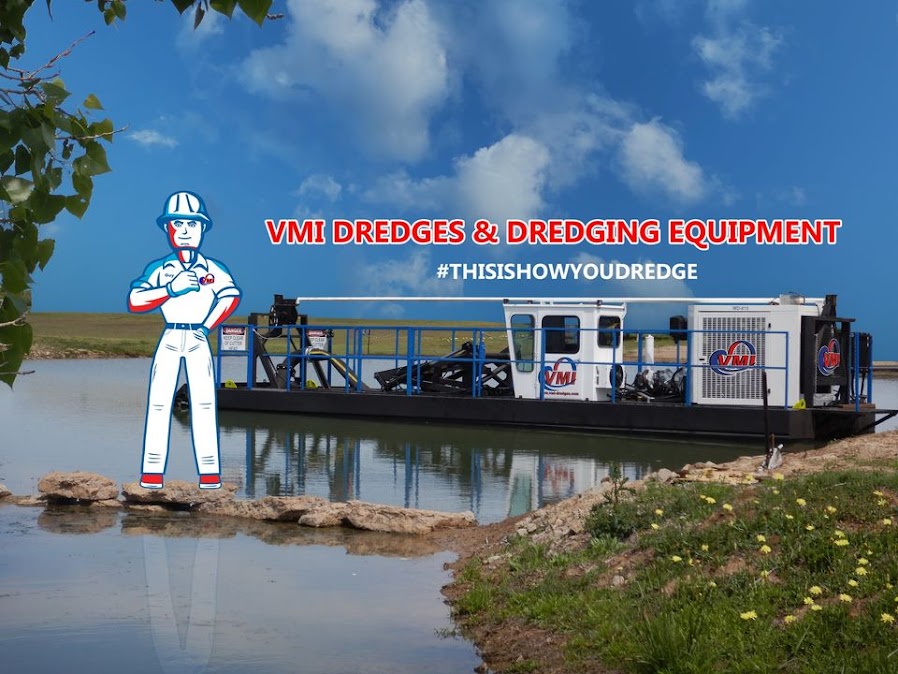
    VMI Horizontal Dredger


    • Restore reservoir capacity
    • Remove industrial sediment buildup
    • Manage mining tailings ponds
    • Support environmental cleanup projects
    • Maintain stormwater and wastewater systems

In many cases, dredging is a critical maintenance activity that helps extend the life of important infrastructure.

Major Types of Dredging Methods
Different dredging methods are used depending on the material being removed, the size of the project, and the environmental conditions of the jobsite.

Hydraulic Dredging
Hydraulic dredging uses pumps to remove sediment and transport it through pipelines as a slurry mixture of water and solids. Material is drawn into the dredge intake, mixed with water, and pumped through pipelines to the discharge area. Hydraulic dredging is widely used because it allows continuous operation and efficient material transport over long distances.

Mechanical Dredging
Mechanical dredging involves physically removing sediment using equipment such as excavators or clamshell buckets. This method is often used in smaller projects or in environments where hydraulic dredging may not be practical.

While effective in certain situations, mechanical dredging generally requires more material handling and transportation compared to hydraulic methods.

Cutter Suction Dredging
Cutter suction dredges combine hydraulic pumping with a rotating cutterhead that loosens compacted material before it enters the suction pipe. This method is particularly effective for removing dense sediment, clay, sand, and other compacted materials.

Cutter suction dredges are widely used in large-scale dredging projects and industrial applications.

Common Types of Dredging Equipment
A variety of specialized equipment is used in dredging operations depending on the project environment and production requirements.

Horizontal Dredges
Horizontal dredges are commonly used in ponds, lagoons, and confined water bodies where sediment accumulation occurs over time. These systems are designed to efficiently remove sediment and pump it through pipelines to the discharge location.

Cutter Suction Dredges

VMI Dredge Gladiator Cutter Suction Dredge


Cutter suction dredges are powerful hydraulic dredging systems capable of removing large volumes of material. Their rotating cutterheads allow them to handle compacted sediments and heavier materials. These machines are frequently used in mining operations, reservoirs, and industrial dredging projects.

Amphibious Excavators
Amphibious excavators are specialized machines designed to operate in shallow water, wetlands, and unstable terrain. Their floating pontoon design allows them to work in environments where conventional equipment cannot safely operate. These machines are commonly used for shoreline work, marsh restoration, and shallow water dredging projects.

The Importance of Pipeline Systems
One of the defining features of hydraulic dredging systems is their ability to transport dredged material through pipelines. Once sediment enters the dredge intake, it is mixed with water to create slurry. This slurry is pumped through pipelines that carry the material to a designated discharge location.

Pipeline systems can extend hundreds or even thousands of feet depending on the project requirements. In some cases, booster pumps are added to maintain slurry flow over longer distances. Efficient pipeline design is critical to maintaining production and minimizing energy consumption during dredging operations.

Industries That Rely on Dredging
Dredging supports a wide range of industries and infrastructure systems around the world.

Mining
Mining operations use dredging to manage tailings ponds, remove sediment from settling ponds, and recover valuable minerals from slurry deposits.

Industrial Facilities
Power plants, refineries, and manufacturing operations often rely on dredging to remove accumulated sediment from ponds used in water treatment and process systems.

Municipal Water Systems
Cities and municipalities use dredging to maintain reservoirs, stormwater systems, and wastewater treatment lagoons.

Environmental Remediation
Dredging is often used to remove contaminated sediments and restore aquatic ecosystems. These projects play a key role in protecting both environmental and public health.

Why Regular Dredging Matters
Sediment accumulation is a natural process that occurs continuously in water environments. Without periodic dredging, these systems gradually lose capacity and efficiency.

Regular dredging provides several benefits:

  • Restores water depth and storage capacity
    • Improves operational efficiency in industrial systems
    • Reduces flooding risks
    • Maintains navigation channels
    • Extends the life of reservoirs and containment areas

By incorporating dredging into long-term maintenance planning, operators can avoid costly emergency dredging projects and maintain reliable infrastructure performance.

The Future of Dredging
As infrastructure ages and environmental regulations evolve, the demand for efficient dredging solutions continues to grow. Industries across the world are increasingly focused on maintaining water systems, improving environmental performance, and managing sediment more effectively. Advancements in dredging equipment, pumping technology, and operational efficiency are helping meet these demands.

At VMI Dredges, our focus is on providing dredging solutions designed to perform reliably in real-world conditions. From sediment removal in ponds and lagoons to large-scale dredging operations, modern dredging equipment plays a vital role in keeping water systems functioning efficiently.

VMI Dredges Logo

918-225-7000

www.vmidredges.comsales@vmi-dredges.com

Call Now       Email Us

Friday, May 22, 2026

The Hidden Cost of Dredging Downtime (And How to Take Control of It)


VMI Dredges We Make Revenue Flow Logo 

The Hidden Cost of Dredging Downtime (And How to Take Control of It)

In the dredging industry, performance is typically measured in production. Cubic yards moved. Hours logged. Projects completed. Those numbers matter. But they don’t tell the full story. Because what they don’t show is often where the real problem lives. Downtime.

THE ILLUSION OF PRODUCTIVITY

Production reports show what got done. They do not show what could have been done. If your dredge runs 6 hours in a 10-hour window, the report reflects activity. But it hides the reality: You lost 4 hours of production. Those hours don’t disappear, they compound into:

• Missed targets 

• Extended timelines 

• Reduced profitability

WHERE DOWNTIME ACTUALLY COMES FROM

Downtime is often blamed on mechanical failure. In reality, it is usually the result of operational inefficiencies that begin long before production starts.

  1. Setup and Mobilization Delays Time lost getting equipment to the job, assembled, and operational.

  2. Transport Inefficiency Systems that are difficult to move create delays before work even begins.

  3. System Complexity More components mean more potential points of delay.

  4. Reactive Maintenance Waiting for issues to occur instead of preventing them.

THE COST OF TIME IN DREDGING Time is not just a scheduling factor. It is one of the most expensive variables in any dredging operation. Every hour lost impacts:

•Production capacity

 •Job timelines 

•Overall profitability 

And unlike equipment costs, time loss is rarely tracked with precision.

HOW HIGH-PERFORMING OPERATIONS THINK DIFFERENTLY

 Leading operations don’t just measure output. They measure consistency. They ask:

•Where are we losing time?

 •How long does it take to get operational?

 •What delays repeat across projects?

And most importantly:

They design their operations around uptime.

THE VMI APPROACH 

At VMI Dredges, the focus is not just on building equipment. It’s on supporting operations that need to stay running. That means:

• Systems designed for efficiency and mobility 

• Equipment built for real-world conditions 

• A focus on uptime, not just specifications

Because in the field, performance is not measured by what a dredge can do. It’s measured by what it actually does consistently.

FINAL THOUGHT

 Dredging operations are not defined solely by output. They are defined by how much time is lost along the way. If downtime is not being measured, it is not being managed. And if it is not being managed, it is costing more than most realize.

IMX 2026 LOGO

VMI Dredges 
IMX 2026 | Nashville, TN 

Booth 1132

If you’re attending IMX, stop by Booth 1132 and let’s talk about what’s really costing your operation time and money.

If you’re not attending, call us at 918-225-7000, we’ll walk through it with you.

If your operation is losing time, it’s losing money. Let’s fix that.

This is how you dredge.

Friday, May 15, 2026

Mobilization: The Most Expensive Part of a Dredging Job Nobody Talks About


  Mobilization: The Most Expensive Part 

of a Dredging Job Nobody Talks About

When people think about the cost of a dredging project, they usually focus on production.

•How much material will be moved.

•How long the job will take.

•What the equipment is capable of.

What rarely gets the attention it deserves is what happens before production even begins.  Mobilization.

•Getting equipment to the jobsite.

•Setting it up.

•Getting it operational.

It doesn’t show up in production numbers.

But it directly impacts everything that follows.

BEFORE YOU EVEN START •Mobilization time is 100% non-productive •Delays here push the entire schedule •Complex systems increase setup time significantly  The job doesn’t start when you arrive. It starts when you’re running.
WHAT MOBILIZATION REALLY INCLUDES

Mobilization is often viewed as a single step.  In reality, it’s a series of events that must align correctly:

•Transporting equipment to the site

•Staging and positioning components

•Assembling systems

•Connecting and testing

•Preparing for production

Each step introduces potential delay.  And each delay pushes production further out.

WHERE TIME IS LOST

“You don’t start losing time when the dredge stops.  You start losing time when mobilization slows down.”

Mobilization is one of the most underestimated sources of downtime.  Based on real-world operations, the most common issues include:

1. Complex Transport Requirements

Large or non-modular systems are difficult to move, requiring more time and coordination.

2. Extended Assembly Time

The more components involved, the longer it takes to get operational.

3. Site Constraints

Limited access, staging challenges, and environmental conditions slow everything down.

4. Inefficient Workflow

When steps are not clearly defined or coordinated, delays stack quickly.

WHY MOBILIZATION MATTERS MORE THAN YOU THINK

Production doesn’t begin when the dredge arrives.  It begins when the dredge is running consistently.  Every hour between those two points is:

WHAT WE SEE IN THE FIELD •Equipment arriving in stages instead of as a system •Crews waiting during setup phases •Delays between assembly and first production •Multiple adjustments before steady operation  Most projects don’t start late. They start slow.
•Non-productive

•Costly

•Often unaccounted for

And once that time is lost, it’s difficult to recover.

THE COMPOUND EFFECT

Slow mobilization doesn’t just delay the start.  It impacts the entire project:

•Schedules shift

VMI Dredges We Make Revenue Flow Logo

•Deadlines tighten

•Pressure increases

•Efficiency drops

And what began as a small delay becomes a larger operational problem.

THE VMI APPROACH

At VMI Dredges, mobilization is not treated as an afterthought.  It is a critical part of the operation.  That means:

•Equipment designed with mobility in mind

HOW TO REDUCE MOBILIZATION TIME •Use systems designed for efficient transport •Minimize assembly complexity •Standardize setup processes •Plan for immediate operational readiness  The faster you start, the more you produce.

•Systems that reduce setup time

•A focus on getting from arrival to production as quickly as possible

Because in dredging, the job doesn’t start when you get there.  It starts when you’re running.

FINAL THOUGHT

Mobilization may not show up in production reports.  But it determines how soon production begins.  And how strong that production will be.  If mobilization is slow, everything else follows.  If mobilization is efficient, everything else improves.

VMI Dredges
VMI Dredges TIMS Logo
IMX 2026 | Nashville, TN
Booth 1132

If you’re attending IMX, stop by Booth 1132 and let’s talk about how to reduce mobilization time and get your operation producing faster.

If you can’t make it, call us at 918-225-7000.

Because if you’re not running, you’re not making money.

IMX 2026 LOGO

This is how you dredge.

Friday, May 1, 2026

Cutter Suction Dredges: The Workhorse of Modern Dredging

  VMI Dredges Dredge Titan


 Cutter Suction Dredges: The Workhorse of Modern Dredging

Among the many types of dredging equipment used across the industry, cutter suction dredges have become one of the most widely used and effective systems for removing sediment and solids from waterways and industrial environments.

These machines combine powerful cutting capability with efficient hydraulic pumping, making them suitable for a wide range of dredging applications.

How Cutter Suction Dredges Work A cutter suction dredge uses a rotating cutterhead positioned at the intake of the suction pipe.

The cutterhead performs two essential functions: Loosening or cutting compacted material such as clay, sand, or sediment

Feeding that material into the suction pipe, where it is mixed with water and pumped through a pipeline to the discharge location, This process allows cutter suction dredges to continuously remove material and transport it efficiently over long distances.

Applications Across Multiple Industries Cutter suction dredges are used in a wide range of projects around the world.

Some of the most common applications include:

  • Mining operations and tailings management 
  •  Port and harbor maintenance 
  • Reservoir and canal dredging 
  •  Industrial pond sediment removal 
  •  Environmental remediation projects

Their ability to handle both loose and compacted material makes them extremely versatile.

High Production Capability One of the major advantages of cutter suction dredges is their ability to move large volumes of material.

VMI Dredges Dredge Gladiator

These systems are designed for continuous operation, allowing dredging projects to maintain steady production rates over extended periods of time. Production levels depend on several factors, including pump size, cutterhead power, pipeline configuration, and material density.

With properly designed systems, cutter suction dredges can deliver exceptional productivity while maintaining reliable operation.

Precision and Control Modern cutter suction dredges are also capable of precise dredging operations. Operators can control the cutting depth and movement of the dredge to target specific sediment layers or maintain consistent dredging profiles. This level of control is particularly important in projects where environmental considerations or structural constraints must be respected.

Reliable Equipment for Demanding Conditions Dredging environments are rarely easy. Equipment must operate in abrasive materials, fluctuating water conditions, and challenging jobsite environments. Cutter suction dredges are engineered to perform in these demanding situations.

At VMI Dredges, our cutter suction dredge systems are designed to provide dependable performance and efficient material removal across a wide range of dredging projects. From industrial sediment removal to large-scale dredging operations, cutter suction dredges continue to serve as one of the most effective tools available for modern dredging work.

VMI Dredges Logo

918-225-7000

www.vmidredges.com • sales@vmi-dredges.com
Call Now       Email Us

Friday, April 24, 2026

The Hidden Costs of Not Dredging Your Pond or Lagoon


VMI Dredges We Make Revenue Flow Logo

The Hidden Costs of Not Dredging Your Pond or Lagoon

Sediment accumulation is a natural process. Over time, ponds, lagoons, reservoirs, and industrial settling basins slowly fill with solids carried by water, runoff, and operational processes. While this buildup often occurs gradually, the consequences of ignoring it can become significant.

For many operations, delaying dredging maintenance can lead to problems that are far more expensive than the dredging project itself.

Reduced Water Capacity One of the first impacts of sediment buildup is reduced storage capacity. As sediment accumulates, the effective volume of ponds and lagoons decreases. This reduction can lead to operational challenges, particularly for facilities that rely on these areas for water storage, settling processes, or wastewater treatment.

In some cases, sediment accumulation can cut available capacity dramatically, forcing facilities to operate closer to overflow conditions during heavy rainfall or peak operational periods.

Increased Flooding Risk When sediment reduces pond depth, water has less room to move and settle. During major rainfall events, reduced capacity can lead to overflow risks that threaten surrounding infrastructure, property, and environmental compliance. Regular dredging helps restore pond capacity and reduces the risk of costly flooding events.

Operational Inefficiencies For industrial facilities and mining operations, sediment buildup can interfere with normal operational processes Settling ponds and tailings areas are designed to function with specific depths and volumes. When sediment reduces these dimensions, systems may become less efficient.

Operators may experience:

  •  Reduced settling performance 
    VMI Dredges Cutter Suction Dredger working in sand pit

  •  Increased turbidity 
  •  Higher maintenance requirements
  •  Reduced production efficiency

In these situations, dredging restores system performance by removing accumulated solids and restoring original design capacity.

Emergency Dredging Costs One of the most expensive dredging scenarios occurs when maintenance is delayed for too long. Facilities that postpone dredging projects may eventually face emergency situations where sediment buildup reaches critical levels. Emergency dredging typically requires faster mobilization, tighter timelines, and higher costs.

Planned dredging programs allow operators to manage sediment buildup in a controlled and cost-effective manner.

Long-Term Infrastructure Protection Dredging should be viewed as preventative infrastructure maintenance rather than an occasional corrective action Regular sediment removal helps extend the life of ponds, reservoirs, and containment areas while protecting operational systems from unnecessary strain.

Facilities that incorporate dredging into their long-term maintenance plans often see improved operational reliability and reduced long-term costs.

Efficient Dredging Solutions At VMI Dredges, we work with operators across multiple industries to provide dredging solutions designed for ongoing sediment management.

Our equipment is used in applications such as:

  • Industrial ponds and lagoons 

  • Mining operations and tailings management 
  • Water reservoirs and retention basins 
  • Environmental remediation projects

Efficient dredging systems help restore capacity, maintain operational performance, and protect valuable infrastructure.


VMI Dredges Logo

918-225-7000

www.vmidredges.com • sales@vmi-dredges.com

Call Now       Email Us

Thursday, April 23, 2026

Grace on the surface. Power below.


VMI Dredge ThrowBack Thursday


Grace on the surface. Power below.
Throwing it back to this VMI cutter suction dredge turning a calm waterline into serious production.

#ThrowbackThursday #ThisIsHowYouDredge #VMIDredges

 https://youtu.be/l-wQ-ATZzrQ

Another VMI MD-615 is loaded, secured and headed east-ready to get to work in Virginia.

  https://youtube.com/shorts/obt3tPkOHVQ?feature=share Virginia bound! 🎶 Another VMI MD-615 is loaded, secured and headed east-ready to g...